Sixteen and a half millimetres
The most consequential dimension on the NS02 is not on the warmer. It is the thickness of the box, because that number decides whether it travels as a parcel or as a letter.
For most of this project the interesting number was 15.4 — the thickness of the warmer itself. Then the packaging came back from the toolmaker and a different number took over: 16.5 mm, the thickness of the retail box. The product decides how it feels in a hand. The box decides how it gets to the hand, and what that costs.
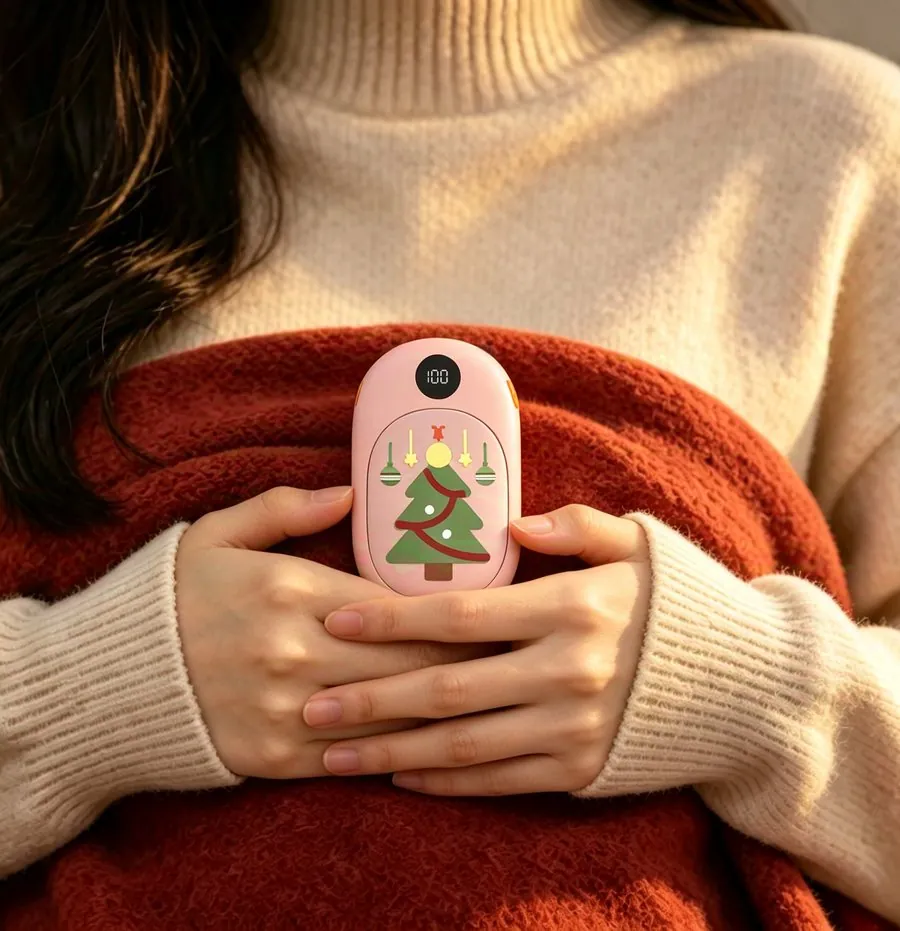
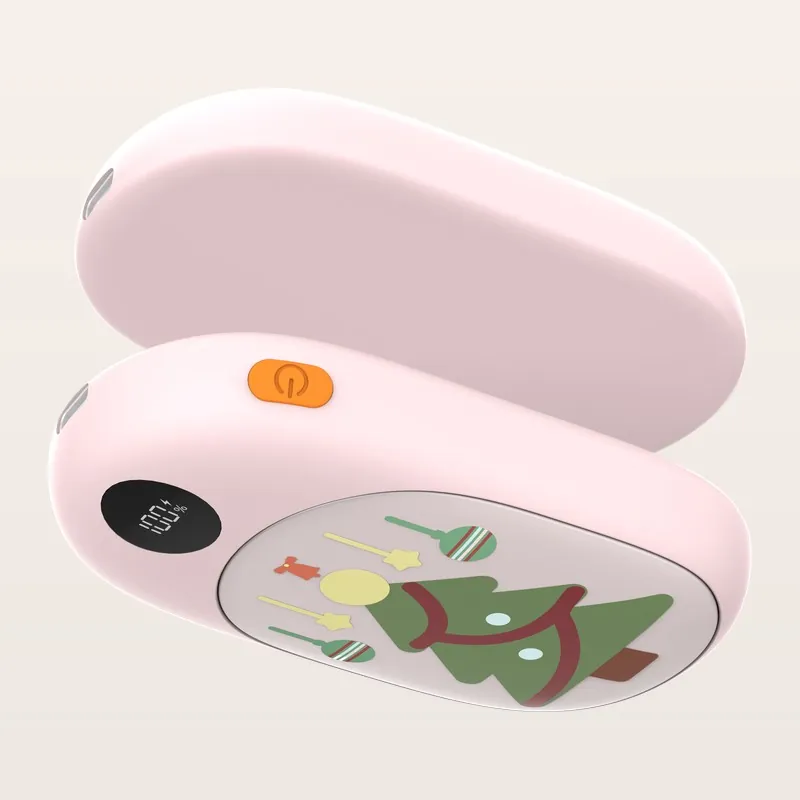
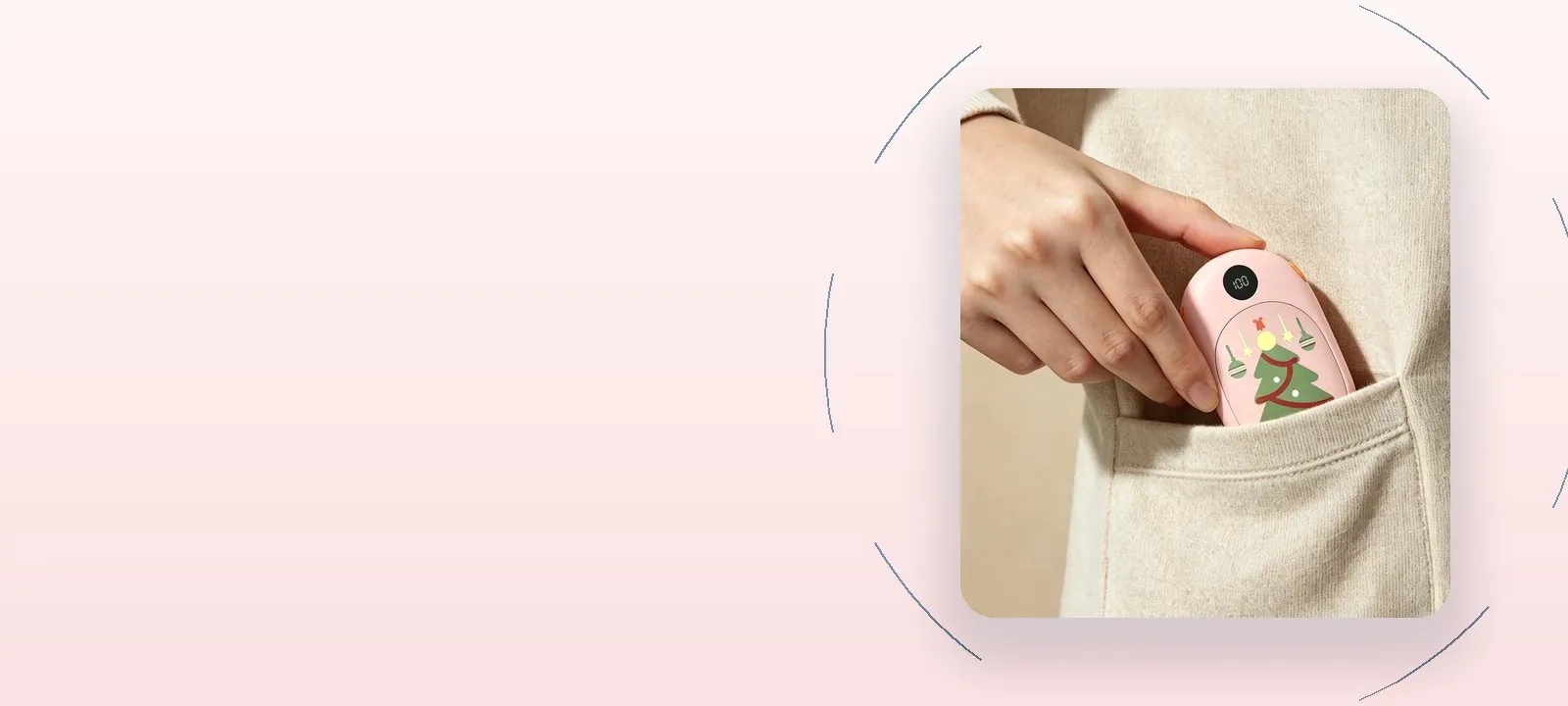
Almost all of the attention went into the warmer: the shell, the heat, the display, the way it disappears into a coat pocket.
This piece is about the other half. Packaging is the only part of a product that has to survive a sorting machine nobody at the company has ever seen — and it is usually the part that decides what the buyer pays at checkout.
01 — Postage is charged on the shape
Postal services sort small mail by shape before they look at weight, because shape is what the machines measure. Letter, large letter, parcel. The gate is almost always thickness — a slot, a roller, a gauge on the counter. Get under it and the item is a letter. Go over by two millimetres and it becomes a parcel, with a parcel's sorting, a parcel's label and a parcel's price.
The three limits we design against are close but not identical. Royal Mail Large Letter: 35.3 × 25 cm, 2.5 cm thick, 750 g. Deutsche Post Großbrief: 35.3 × 25 cm, 2 cm, 500 g. USPS flats: 15 × 12 in and ¾ inch, which is 19.05 mm.
The box is 16.5 mm. Inside a paper mailer with a printed address label it measures around 18 mm at the thickest point. That clears the German limit by two millimetres and the American one by about one.
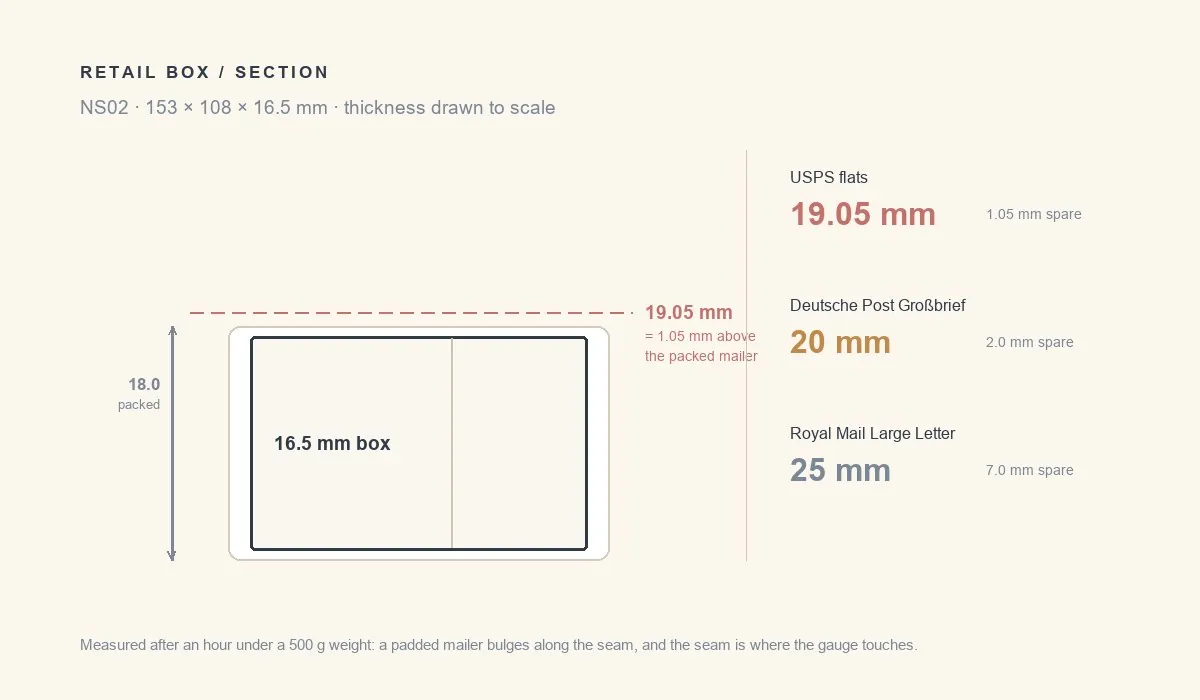
One millimetre sounds like luck. It is a test result. We left the packed box under a 500 g weight for an hour before measuring, because a padded mailer bulges along the seam and a box that has spent a month in a warehouse is not the box that left the factory.
02 — The box is built around a pair
A single NS02 is 91.7 × 54 × 15.4 mm and 120 g. Two of them snap together magnetically along their long edges into one wider warmer, 108 mm across, which is how a lot of people actually use it: one unit in each hand, or one unit that covers more of a pocket.
Now read the box: 153 × 108 × 16.5 mm. The 108 is not a coincidence. Two 54 mm halves make 108, and that is exactly the internal width. What is left over is 61.3 mm along the length — enough for the charging cable and a folded manual, with a few millimetres of air so the tray can be loaded by hand.
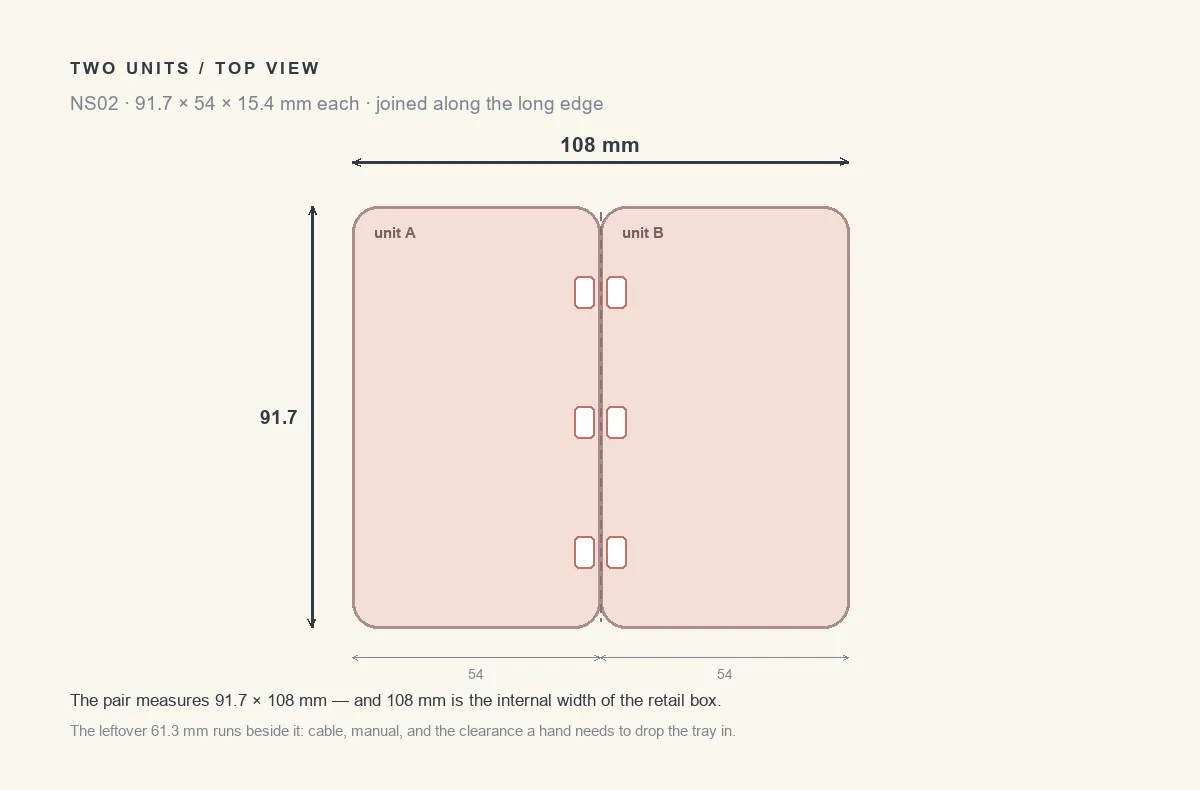
So the standard pack is two units, one cable, one manual. That is a commercial decision as much as a mechanical one: a single warmer reads as an accessory, a pair reads as a gift, and the postal cost per unit halves without changing the box.
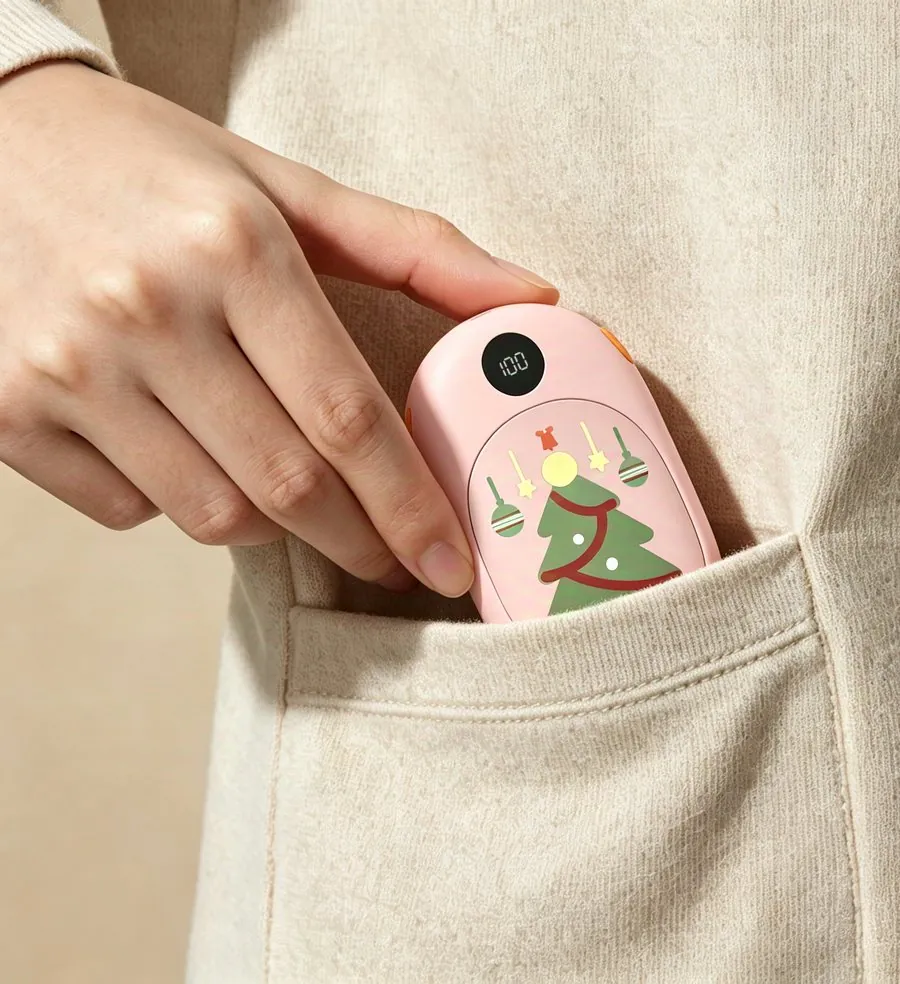
Thin products are usually thin only in the middle. A rounded shell, a button that stands proud, a display that sits on a raised bezel — each one adds a millimetre exactly where the gauge touches.
The button on NS02 is flush with the shell and the display sits behind the same front surface. It is the least visible piece of design work on the product and the reason the box could stay at 16.5 mm.
03 — What the box gives up
No window. No blister. No foam. The unit sits in a moulded pulp tray and you tip it out rather than lifting it on a ribbon. A window would have added a sheet of PET and about 0.6 mm; a folded card wrap with a magnetic flap added 1.2 mm in the sample we made, which is more than the entire margin we had.
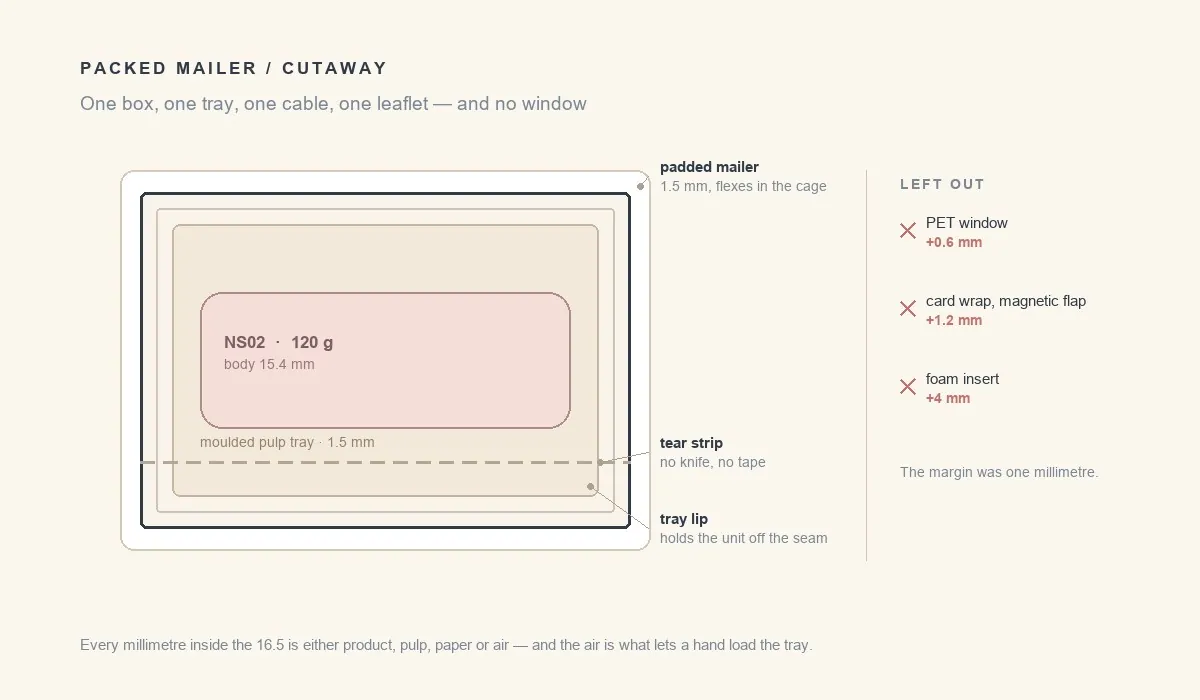
Packaging weighs roughly 38 g, so a packed box lands near 158 g. In most markets that is inside the 100–250 g tier — the same tier as a small book. We spend the grams on the mailer and the tray rather than on a heavier carton, because the mailer is what protects the corners in the sorting machine.
It is not a beautiful box. It is a box that survives a letter cage, opens with one tear strip and can be posted by someone standing at a kitchen table with a printer and a roll of labels.
04 — The warmer, briefly
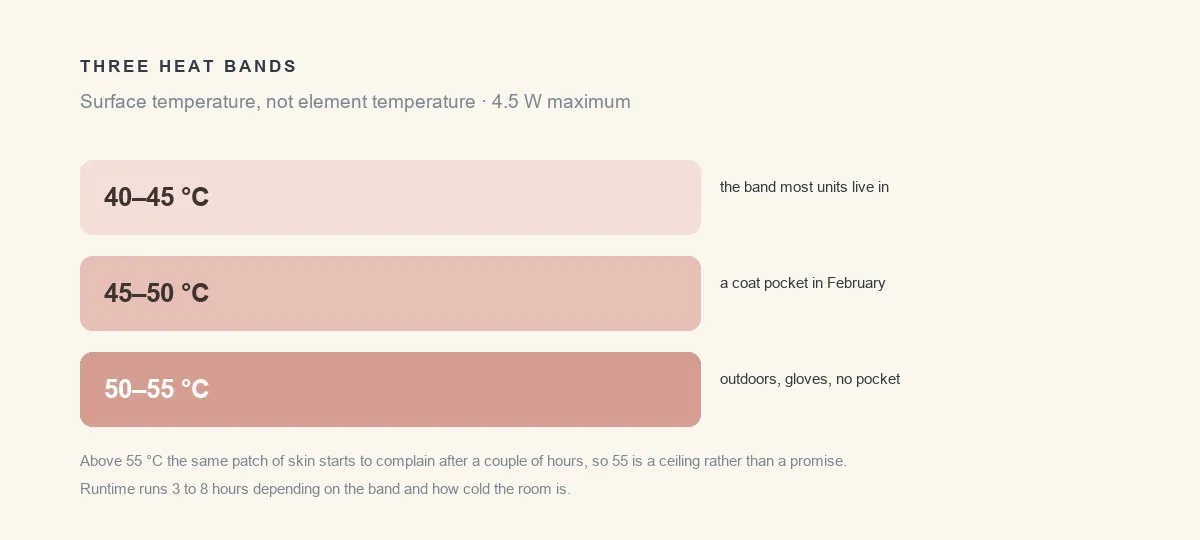
A 2000 mAh cell (103450, 3.7 V), 4.5 W maximum, three bands at 40–45 °C, 45–50 °C and 50–55 °C, three to eight hours depending on which band and how cold the room is. Type-C charging, about three hours. A percentage readout instead of four bars.
The percentage is the battery, not the heat. A unit showing 100% is not necessarily warm; it means the cell is full and the element will reach its band in a few seconds. We kept the number because the alternative — three dots and a guess — is what makes people carry a spare.
Two honest notes. 55 °C is a ceiling, not a promise, and it is deliberately below the point where skin starts to complain. Held against the same patch of skin for two hours, any hand warmer at that temperature will leave a mark; the band most people settle on is the first one. And lithium does not like cold: at −5 °C expect a fifth less capacity than the number on the box, which is why the cell sits behind the heating film rather than at the end of the body.
A box that clears the slot by one millimetre is worth more to a buyer than a box that looks expensive.
05 — Where the letter rate stops working
Two caveats, because this is the sort of claim that gets checked. The first is American: USPS also asks whether the mailpiece is rigid. A box that will not bend is priced as a parcel no matter how thin it is. The mailer has to flex and the unit inside has to stay put — which is why the pulp tray has a lip that holds the unit away from the mailer's seam.
The second is seasonal. Parcel networks add surcharges in November and December; letter rates do not move. So the advantage is largest in exactly the weeks when a hand warmer sells, and it disappears in the same weeks for anyone who has already committed to a parcel box.
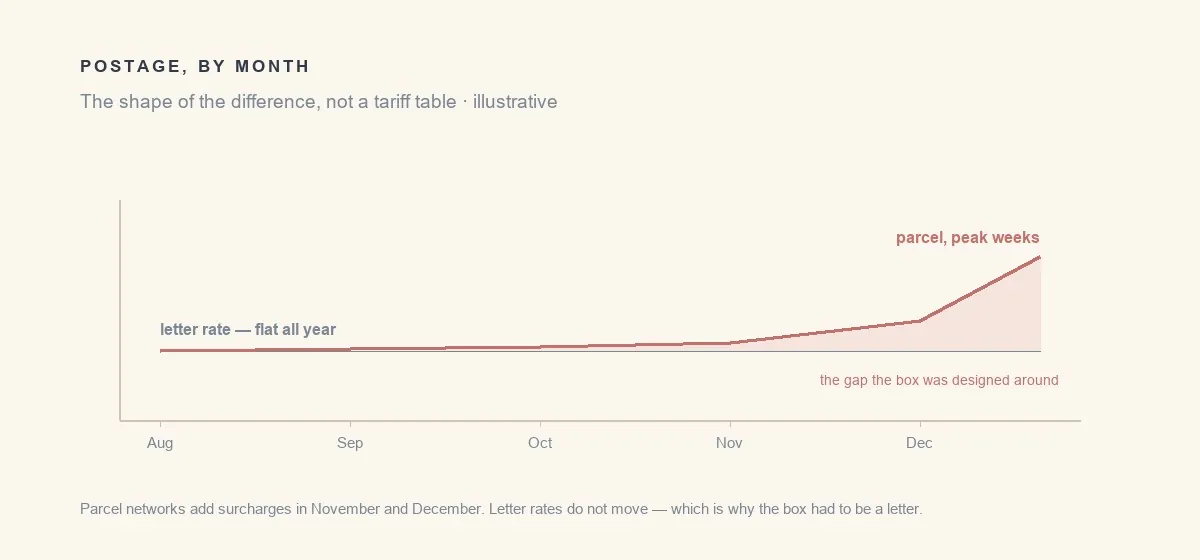
None of this makes the product cheaper to manufacture. It makes it cheaper to deliver, which for a €30 gift is often the difference between a sale with free shipping and no sale at all.